Architect vs Architectural Technologist: which one do you need for your extension?
For most domestic extensions in Sussex, a Chartered Architectural Technologist is as qualified as an Architect. Here's the practical difference, and how to choose.
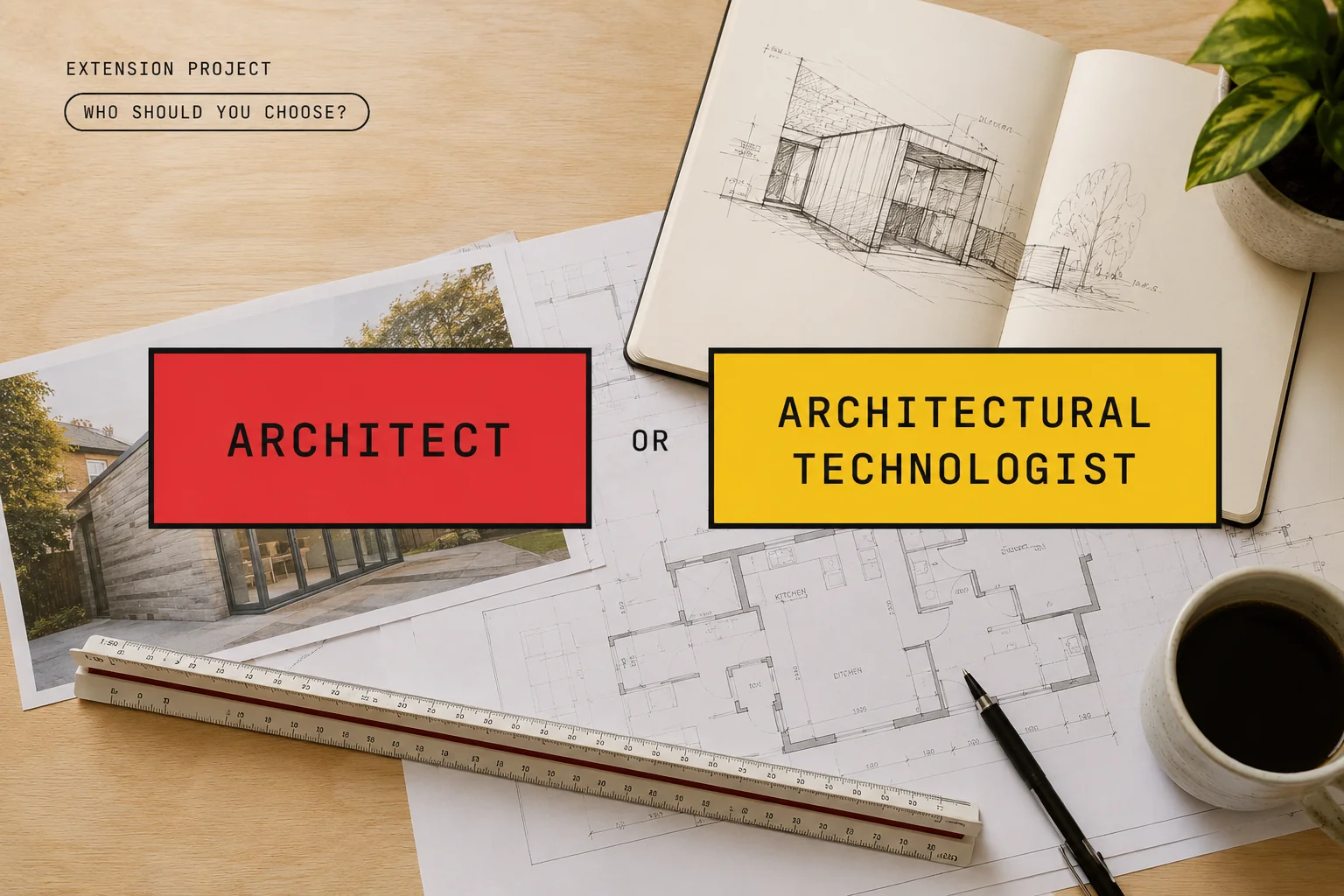
Most homeowners planning an extension in Sussex start by looking to find an Architect. It is the title people know, and for good reason. But it is not the only option, and for many domestic projects the alternative may be everything you need. There is another professionally qualified route that most homeowners have never heard of: the Chartered Architectural Technologist. The two roles overlap more than you might think, and understanding the difference can help you choose the right designer for your project.
The practical difference
An Architect is registered with the Architects Registration Board (ARB). The title is protected by the Architects Act 1997: only a registered person can use that name. An Architectural Technologist is a member of the Chartered Institute of Architectural Technologists (CIAT) and uses the protected title Chartered Architectural Technologist, or the designation MCIAT.
Both design domestic extensions. Both prepare drawings for planning and building regulations. Both can act as Principal Designer under the Building Safety Act 2022, a role that every notifiable domestic project now requires.
For a homeowner, the differences that matter are:
- Training route. Architects complete the Part 1, Part 2, and Part 3 postgraduate pathway. Architectural Technologists complete a CIAT-accredited degree and a professional assessment focused on the technology of building design.
- Title protection. Both Architect and Chartered Architectural Technologist are protected titles. Neither is less qualified in any general sense. The two are differently qualified, with different areas of emphasis but a good amount of overlap between the roles.
- Design scope. Both can lead residential design from concept to completion. Both can sit on design review panels. For domestic projects, the choice is rarely about capability.
Which do you need?
For most domestic extensions, loft conversions, and building regulations submissions in Haywards Heath, Burgess Hill, East Grinstead, and other Sussex villages, either an ARB-registered Architect or a Chartered Architectural Technologist can do the job well. Both hold professional indemnity insurance, both carry the competence to act as Principal Designer, and both are regulated by their respective professional bodies.
The question is less about which title appears on the letterhead and more about the individual designer’s experience with your type of project. A Chartered Architectural Technologist’s training is rooted in building technology, construction detailing, and regulatory compliance, which means the day-to-day language of Approved Documents and building control submissions is core to the role rather than an adjunct to it. That can be a natural fit for technically led domestic work.
A registered Architect may be the stronger choice for larger scale new-build developments where the design concept is the primary driver, for listed building work where heritage sensitivity is central, or for more complex sites where the architectural vision needs to lead the process.
But for the vast majority of domestic projects, the professional you need is a competent, chartered designer with relevant experience, not a specific title. Both routes produce that.
Frequently asked
Do I need an Architect for an extension?
No. Building regulations require competent drawings and a Principal Designer. They do not require the designer to be an Architect by name. A Chartered Architectural Technologist satisfies the same competence requirements.
Is a Chartered Architectural Technologist qualified to design my extension?
Yes. MCIAT is the recognised professional qualification for the design and technical management of building projects, and carries professional indemnity insurance at the same level as an Architect.
Can an Architectural Technologist act as Principal Designer?
Yes. Both ARB-registered Architects and CIAT-chartered Architectural Technologists can be appointed as Principal Designer under the Building Safety Act 2022, provided they hold the relevant competence.